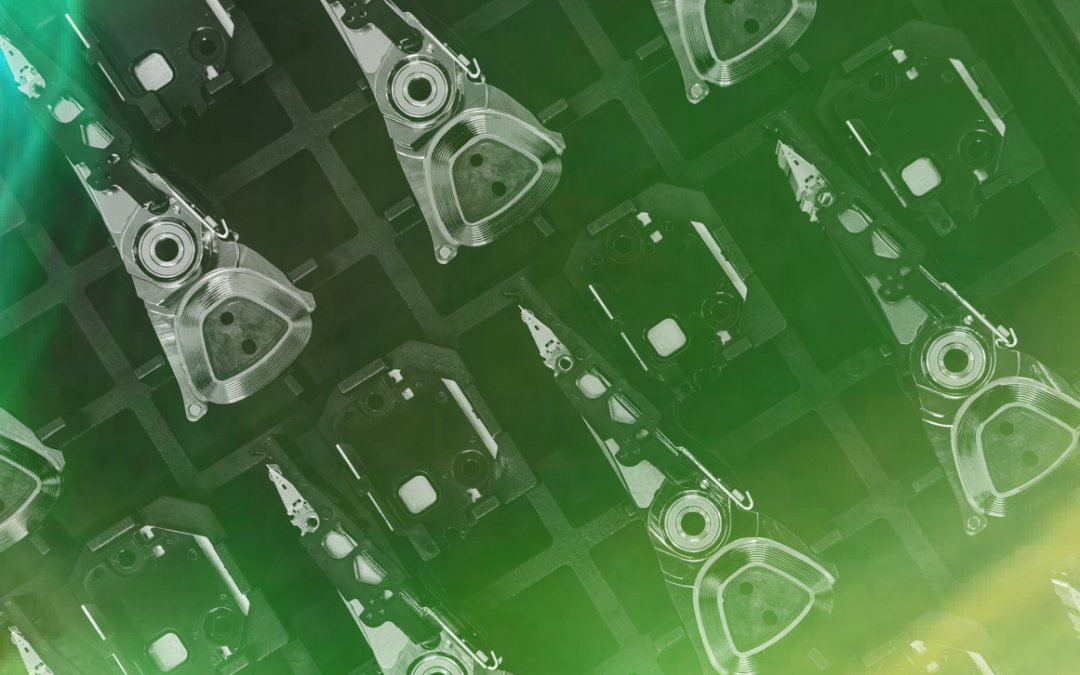

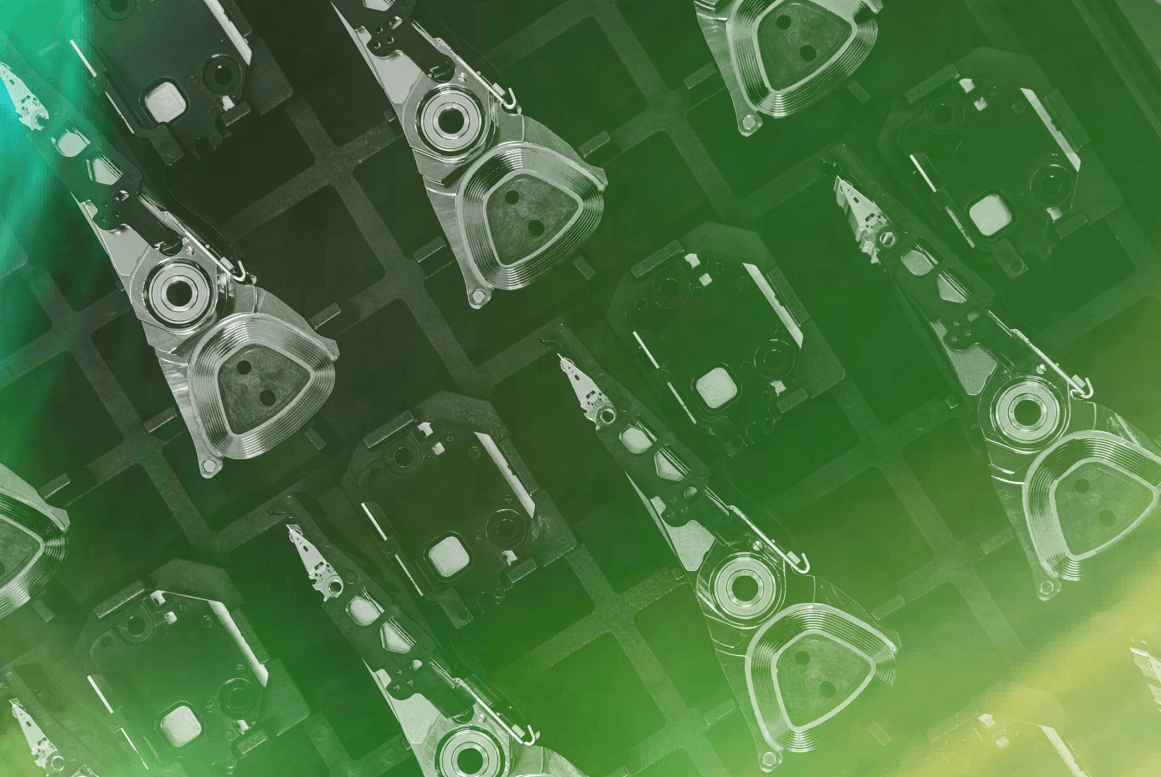
As Artificial Intelligence and Big Data continue to strain global infrastructures, storage giant Seagate has reached a major milestone. With the launch of its Mozaic 3+ platform, the company isn’t just increasing hard drive capacity; it is redefining materials science to achieve unprecedented areal densities.
Discover how HAMR (Heat-Assisted Magnetic Recording) technology, the core of Mozaic 3+, is transforming the data center landscape.
What is the Seagate Mozaic 3+ Platform?
The Mozaic 3+ platform is the culmination of decades of nanotechnology research. It enables storage of 3TB per platter (and soon more), allowing for the creation of 30TB and 32TB hard drives, with a roadmap extending toward 50TB.
Unlike traditional recording technologies (PMR), Mozaic uses a nanophotonic laser to locally heat the medium before writing, ensuring perfect magnetic stability despite extreme data density.
The 4 Technological Pillars of Mozaic 3+
The success of this platform relies on the synergy of four revolutionary components:
Superlattice Platinum Alloy Media: To prevent magnetic instability caused by miniaturization, Seagate uses an ultra-resilient platinum alloy structure.
Plasmonic Writer: A high-precision laser heats the disk to over 425°C in less than 2 nanoseconds on a microscopic area, making the medium temporarily ready for data writing.
7th Gen Spintronic Reader: The world’s smallest and most sensitive magnetic field sensor, designed to read these ultra-compact data bits.
12nm Integrated Controller: The brain of the operation, a custom-built processor that orchestrates these nanotechnologies with record-breaking energy efficiency.
Why Mozaic 3+ is a Game Changer for Data Centers
For enterprises and Cloud Service Providers (CSPs), the benefits are massive and measurable. Moving from 16TB drives to Mozaic 30TB models allows for:
Doubling Storage Capacity within the same footprint (same number of racks).
45% Reduction in Power Consumption per TB, a crucial advantage in the face of the energy crisis.
55% Reduction in Carbon Footprint per TB, helping data centers meet their sustainability (ESG) goals.
TCO Optimization (Total Cost of Ownership): Fewer servers, less maintenance, and more storage power.
“Plug-and-Play” Integration
One of the greatest strengths of the Exos Mozaic 3+ is its compatibility. Although the internal technology is a feat of quantum physics, the drive behaves like any standard SATA or SAS drive. No software or hardware modifications are required for the host to benefit from 30TB of storage.
Conclusion: The Future of Storage is Magnetic
While some predicted the end of mechanical hard drives in favor of SSDs, Seagate proves with Mozaic 3+ that HDDs remain the undisputed kings of mass storage. With proven reliability (2.5 million hours MTBF) and capacities ready for the AI era, the Mozaic platform stands as the foundation of the global datasphere.
This is a response to the call of the ever-expanding cloud ecosystem.
These new hard drives are a game-changer in storage. Today, even a NAS can become a small data center. The remaining question concerns the evolution of RAID and rebuilds with ever-increasing capacities. We will prepare a special article on this topic.
More information is available on the Seagate page: https://www.seagate.com/fr/fr/innovation/mozaic/
To learn more about how to best utilize these new hard drives, feel free to check out our various tools:


Related Articles

RAIDZ1 vs. RAIDZ2: Why Your 20TB, 32TB+ Drives Change the Rules
If you are building a NAS in 2026, you likely have your eyes on high-capacity drives. Prices are dropping, and the idea of...

Optimizing ZFS Recordsize : The (hidden) variable for massive performance gain
Optimizing ZFS Recordsize: The "Hidden" Variable for Massive Performance Gains If you’ve been diving into the world of ZFS, you’ve...