

Introduction
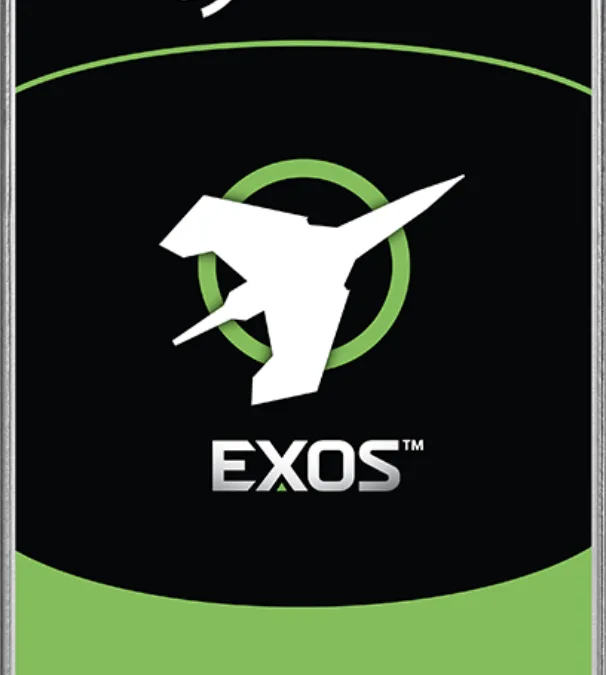
The 30TB barrier has officially been shattered. Seagate has announced a historic milestone with the shipping of its new hard drives based on the Mozaic 4+ platform. By leveraging Heat-Assisted Magnetic Recording (HAMR) technology, the manufacturer is now achieving phenomenal capacities of 40TB and 44TB per unit. While this density is a breakthrough for data centers, it introduces critical new challenges for NAS users and ZFS enthusiasts.
1. HAMR Technology: How Seagate Reached 44TB
Unlike traditional recording methods (PMR/SMR), the Mozaic 4+ platform uses a nanophotonic laser to heat the disk platter at a microscopic scale before writing data.
Record Density: Over 4TB per platter.
Energy Efficiency: More storage in the same 3.5-inch form factor, significantly reducing power consumption per terabyte.
Availability: Currently shipping to hyperscale cloud providers, with a gradual rollout expected for the enterprise and NAS markets.
2. The Resilvering Challenge: Why 44TB Changes Everything
This is where theory meets reality. The denser a drive is, the longer its rebuild time (or resilvering) becomes. With a 44TB drive, a rebuild in a RAID-Z1 configuration (single-drive parity) could take several days, or even a week, depending on your server’s workload. During this time, your pool is highly vulnerable: if a second drive fails before the process finishes, you lose all your data.
Expert Insight: With capacities exceeding 30TB, moving to RAID-Z2 (double parity) or RAID-Z3 is no longer just an option—it is a security necessity.
3. Simulate Your Setup with Our Tools
Before investing in these storage giants, it is crucial to properly size your architecture:
RAID Calculator: Calculate the actual usable space on a 44TB drive pool after accounting for parity and ZFS “slop space.”
Rebuild Simulator: Estimate the resilvering time for your system in the event of a 40TB+ drive failure to choose the right level of redundancy.
Conclusion
The arrival of Seagate’s 40TB and 44TB drives marks the beginning of a new era. While the promise of storing petabytes in a small server is enticing, managing parity overhead and hardware bottlenecks is now the number one priority for sysadmins.
Vivamus magna justo, lacinia eget consectetur sed, convallis at tellus. Lorem ipsum dolor sit amet, consectetur adipiscing elit. Nulla porttitor accumsan tincidunt. Vestibulum ac diam sit amet quam vehicula elementum sed sit amet dui. Praesent sapien massa, convallis a pellentesque nec, egestas non nisi. Nulla quis lorem ut libero malesuada feugiat. Curabitur aliquet quam id dui posuere blandit. Vivamus suscipit tortor eget felis porttitor volutpat. Mauris blandit aliquet elit, eget tincidunt nibh pulvinar a.
Seagate begins shipping the first 40TB, 10-platter HAMR hard drives.


Donec sollicitudin molestie malesuada. Vestibulum ac diam sit amet quam vehicula
Cras ultricies ligula sed magna dictum porta. Curabitur arcu erat, accumsan id imperdiet et, porttitor at sem. Vivamus magna justo, lacinia eget consectetur sed, convallis at tellus. Donec sollicitudin molestie malesuada. Mauris blandit aliquet elit, eget tincidunt nibh pulvinar a. Pellentesque in ipsum id orci porta dapibus. Vivamus suscipit tortor eget felis porttitor volutpat. Vestibulum ac diam sit ame

Divi Meetup 2019, San Francisco
Related Articles

RAIDZ1 vs. RAIDZ2: Why Your 20TB, 32TB+ Drives Change the Rules
If you are building a NAS in 2026, you likely have your eyes on high-capacity drives. Prices are dropping, and the idea of...

Optimizing ZFS Recordsize : The (hidden) variable for massive performance gain
Optimizing ZFS Recordsize: The "Hidden" Variable for Massive Performance Gains If you’ve been diving into the world of ZFS, you’ve...
Stay Up to Date With The Latest News & Updates
Access Premium Content
Sed ut perspiciatis unde omnis iste natus error sit voluptatem accusantium doloremque
Join Our Newsletter
Sed ut perspiciatis unde omnis iste natus error sit voluptatem accusantium doloremque
Follow Us
Sed ut perspiciatis unde omnis iste natus error sit voluptatem accusantium doloremque